When the Customer Is an Agent, Math Can’t Be a Guess
Last April, Tina He asked a deceptively simple question that still echoes when we consider agent math:
What happens when AI agents become your primary users?
That question opened a clear line of inquiry. If AI agents are the ones clicking buttons, reading documents, and deciding what APIs to call, then a lot of software assumptions break. In her latest piece, Tina expands the idea and names five types of businesses that become irreplaceable when agents are the decision makers.
Her conclusion is sharp. The companies that endure won’t necessarily have the best models or the best interfaces. They will be the ones that own the infrastructure agents need and cannot route around. In an environment where switching costs vanish and evaluations happen in milliseconds, usefulness wins.
At TrueMath, that perspective hits home.
Tina described the new edge as the systems between “algorithmic decisions and real-world consequences.” That is exactly where math lives. Agents cannot afford to hallucinate a loan payment or miscalculate a price. Close is not good enough. They need to be correct, every time.
We believe the better agents get, the more pressure they create on the systems behind them. LLMs may continue improving at reasoning, but that just increases demand for execution layers that are accurate, explainable, and structured. The same pattern happened with vector databases and embedding models. Better AI increases the need for solid infrastructure.
That is the role TrueMath is designed to fill.
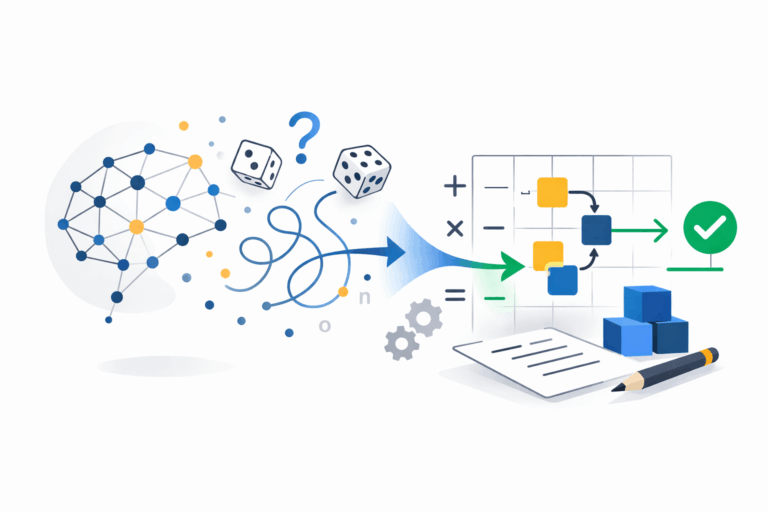
We turn natural language prompts into structured, deterministic math. We return not just a number, but a full explanation of how it was calculated, what assumptions were used, and what version of the logic applied. Our system is composable, traceable, and built to hold up under real-world scrutiny.
Agents may be fast, but they still need math they can trust.
Imagine an AI assistant evaluating APIs for a property underwriting task. One endpoint returns a number. The other returns the same number, but with a full audit trail and the option to reproduce the result six months from now. The agent chooses the second one. Not because it looks better, but because it is safer.
We are seeing this play out across real estate, finance, analytics, and operations. People are already building agents that walk users through affordability calculations, scenario plans, and investment models. Behind the scenes, they need a layer that makes sure every number holds up. That is what TrueMath provides.
Tina also wrote about “agent soul infrastructure,” a phrase I love. It suggests that usefulness and depth are becoming the real differentiators. We think part of that depth will be trust in the numbers. Agents that calculate need a place to send the math. And they need to know that when they do, they will get back something solid.
We’ve been building that system. TrueMath works today, and it’s starting to power agent-style workflows in high-trust domains like real estate and finance. Our goal now is to bring a scaled version of that infrastructure to the broader market. We’re aiming to close our seed round by the end of March to accelerate that rollout.
If you are working on this layer too, or thinking about how to make agents safe, smart, and capable in the wild, I would love to exchange ideas.
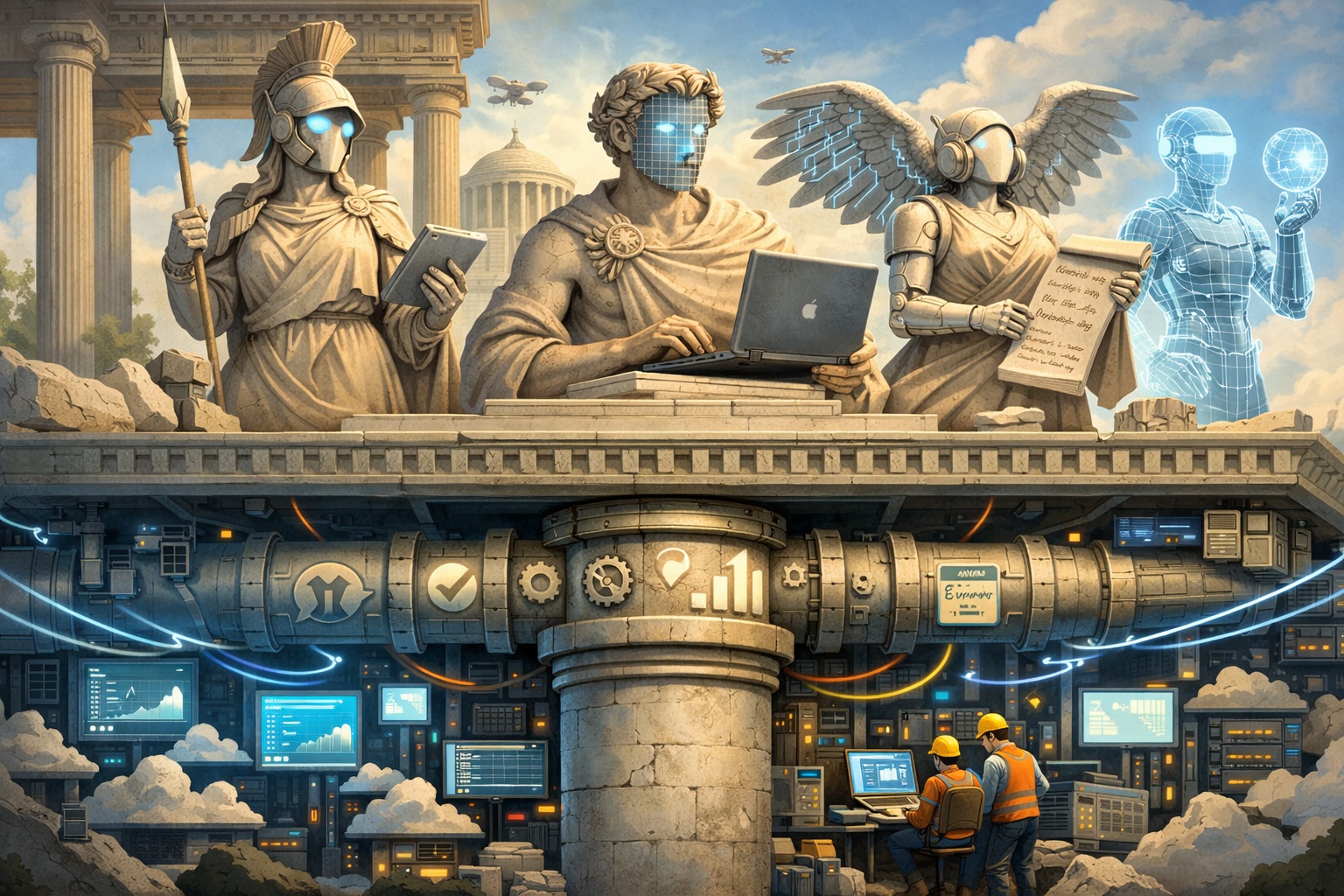
We are not building speculation. We are building the scaffolding agents will stand on. In this next phase of software, that might be what matters most.
Reach out: bill.kelly@truemath.ai
Learn more: truemath.ai
Sign up for early access: https://app.truemath.ai/signup