
Why People Hate AI (And What Builders Should Do About It)
Nilay Patel wrote a widely read piece in The Verge this week about the disconnect between the tech community and everyone else, especially around AI. Most people outside tech hate AI, he points out, and their opinion is getting worse with time.
I see this at home. My daughters, both Gen Z, are massively against it, and holding their noses at the fact that I am building a related product in this space. They worry about the environmental impact. They worry about their job prospects. They worry about society at large. Those are real concerns, and dismissing them is part of why the gap exists in the first place.
This passage from Nilay’s piece jumped out at me (emphasis his):
I’ve reviewed a lot of tech products over the past decade and a half, and all I can tell you is that it is a failure when you ask people to adapt to computers. Computers should adapt to people. Asking people to make themselves more legible to software — to turn themselves into a database — is a doomed idea.
I think this is exactly right, and I think it explains a lot of the hostility.
The promise of AI and the thing that made language models feel different the first time I used one, was that users wouldn’t have to adapt anymore. You’d write in your own words and the computer would meet you where you are. That’s a real shift. It’s the thing the best software has always tried to do. Visicalc let accountants change a number and see the impact. WordPerfect let writers move paragraphs around. Photoshop let people fix blemishes. The best software has always met people partway, asking them to learn less, rewarding them more for what they do learn.
But current AI products are running the opposite play. They ask users to do the adapting: write the right prompt, structure the request, verify the output, catch the hallucinations. Don’t trust it with anything that matters.
That’s not “computers adapting to people,” that’s people doing unpaid QA for a probabilistic system.
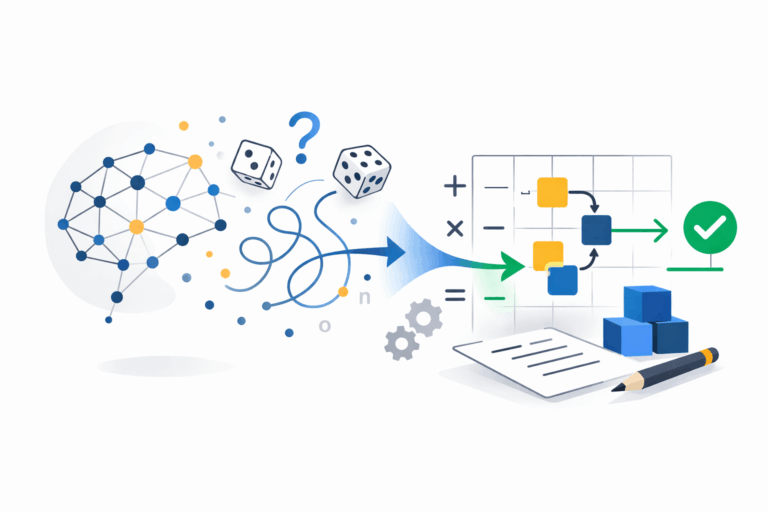
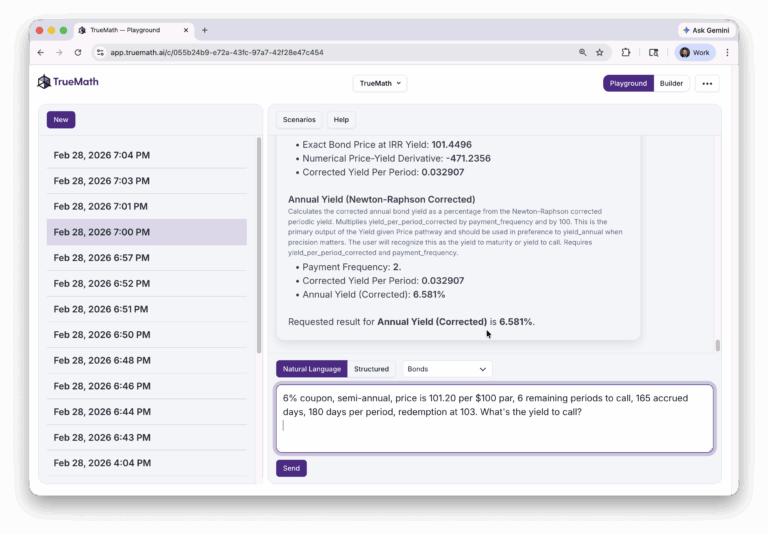
The gap between the promise and the reality is, I think, a big part of why people are turning on AI. They were sold a tool that would meet them where they are. They got a tool that demands they meet it where it is, and then hallucinates when they get there. That’s what has to change.The answer isn’t to keep insisting people adapt. It’s to build the deterministic infrastructure underneath. Let the model handle translation. Let real systems handle execution. That’s what we’re doing with TrueMath.
Reach out: elia.freedman@truemath.ai
Learn more: truemath.ai
Sign up for early access: https://app.truemath.ai/signup
Discover more from TrueMath
Subscribe to get the latest posts sent to your email.